ChatGPT, Claude, and Gemini all market themselves as the one assistant you need for everything. They can’t all be right, and “everything” is doing a lot of work in that sentence.
This comparison doesn’t rest on a private test run in a spare afternoon. It rests on what the three companies document about their own products, what public benchmarks measure, and where those two things disagree. Every number below points at a source you can open yourself.
The short version: pick by what you do most. Not by which model topped a leaderboard last month.
How we compared
Three kinds of evidence, in this order.
Official documentation. Prices, plan tiers, and feature availability come from each company’s own pricing and support pages, checked in July 2026. Those pages are the only authority on what you’ll actually be charged.
Published third-party benchmarks. For capability claims we use public leaderboards that publish their methodology, chiefly LMArena’s human-preference rankings, plus the task-specific benchmarks named in the sections below.
Our own screenshots. The images here are captures of publicly reachable pages, taken logged out, so you can see what each tool looks like before you sign up for anything.
What you won’t find is a scoreboard from a private test run. Anyone can produce one. Almost nobody can reproduce it, and a result from one person on one afternoon tells you very little about your own prompts.
What the three actually cost
Pricing is the part that needs no judgment calls. Here’s where each service sits as of July 2026, according to each company’s own pricing page.
| Plan | Price | What it gets you |
|---|---|---|
| ChatGPT Free | $0 | Lighter default model, rolling message cap, ads on some answers in the US |
| ChatGPT Go | $8/mo | Higher limits than Free, ads still shown |
| ChatGPT Plus | $20/mo | Flagship models, higher limits, Codex coding agent, no ads |
| ChatGPT Pro | $100 or $200/mo | Two tiers, much higher usage on the flagship models |
| Claude Free | $0 | Web, mobile and desktop chat, memory across conversations, extended thinking |
| Claude Pro | $20/mo, or $17/mo billed annually | Claude Code, Cowork, unlimited projects, more usage |
| Claude Max | $100 or $200/mo | 5x or 20x Pro usage, higher output limits, priority access |
| Gemini free tier | $0 | Sliding capacity limits, capped Deep Research reports |
| Google AI Plus | $4.99/mo | 400 GB storage, roughly 2x the Gemini limits of the free tier |
| Google AI Pro | $19.99/mo | 5 TB storage, 4x limits, YouTube Premium Lite included |
| Google AI Ultra | $99.99 or $199.99/mo | Up to 20x the Pro plan's Gemini limits, Deep Think reasoning mode |
Three details that trip people up. Claude’s $17 rate is the annual-billing price, listed on Anthropic’s pricing page as $200 charged up front; month to month it’s $20 like the others. Google restructured its top tier at I/O 2026, adding a $99.99 Ultra option below the $199.99 one, so an older article quoting $249.99 is out of date. And OpenAI’s page prices in your local currency, so the figure you see may not be the one above.
Before paying for any of this, our list of free AI tools that are genuinely useful is worth a look, since it covers what you can already do without spending a cent.
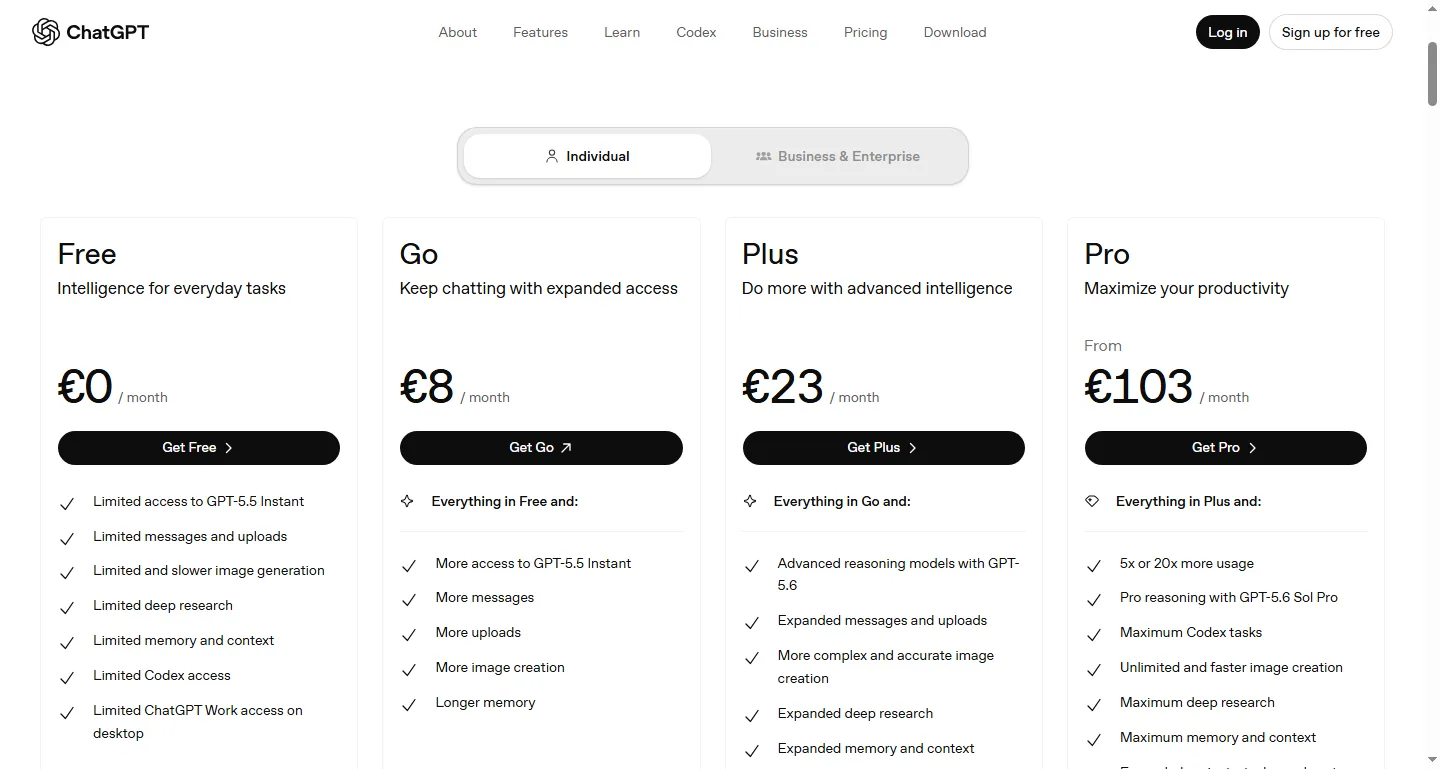
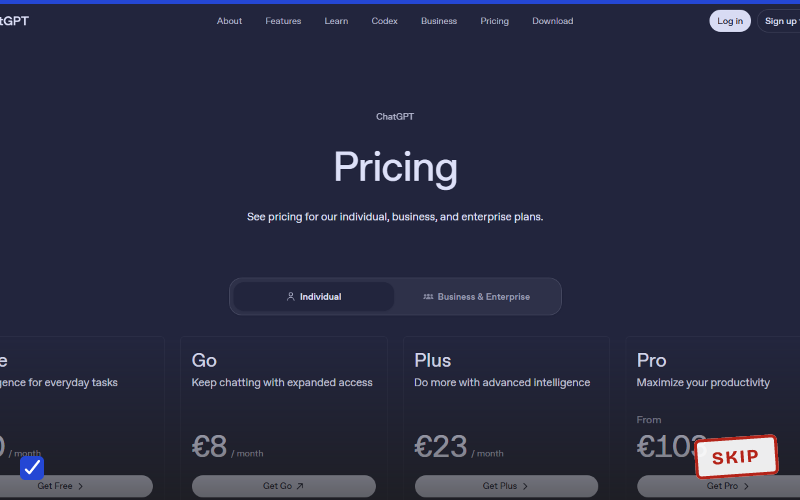
ChatGPT’s four consumer tiers as OpenAI presents them. Our capture was taken from an EU connection, so the amounts render in euros; the tier structure is what to read here.
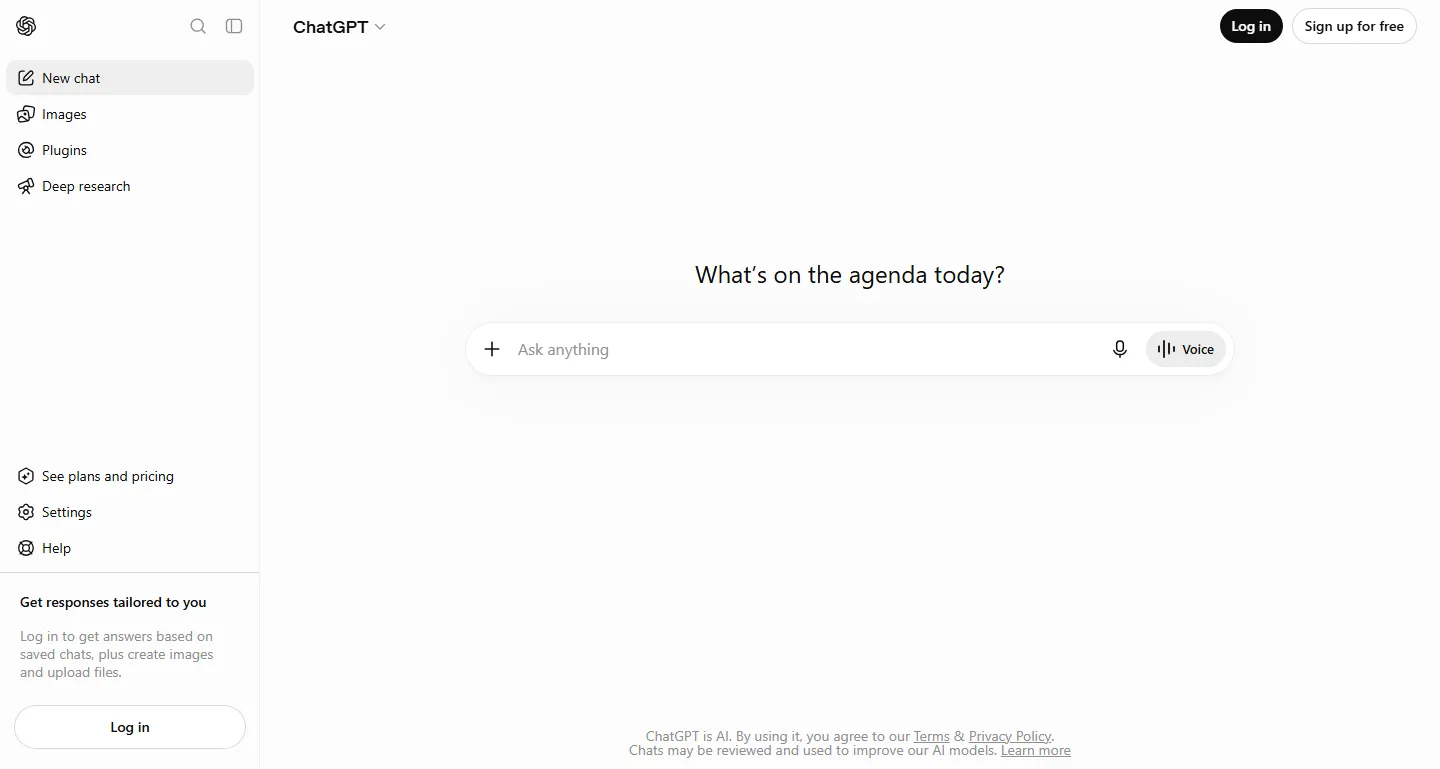
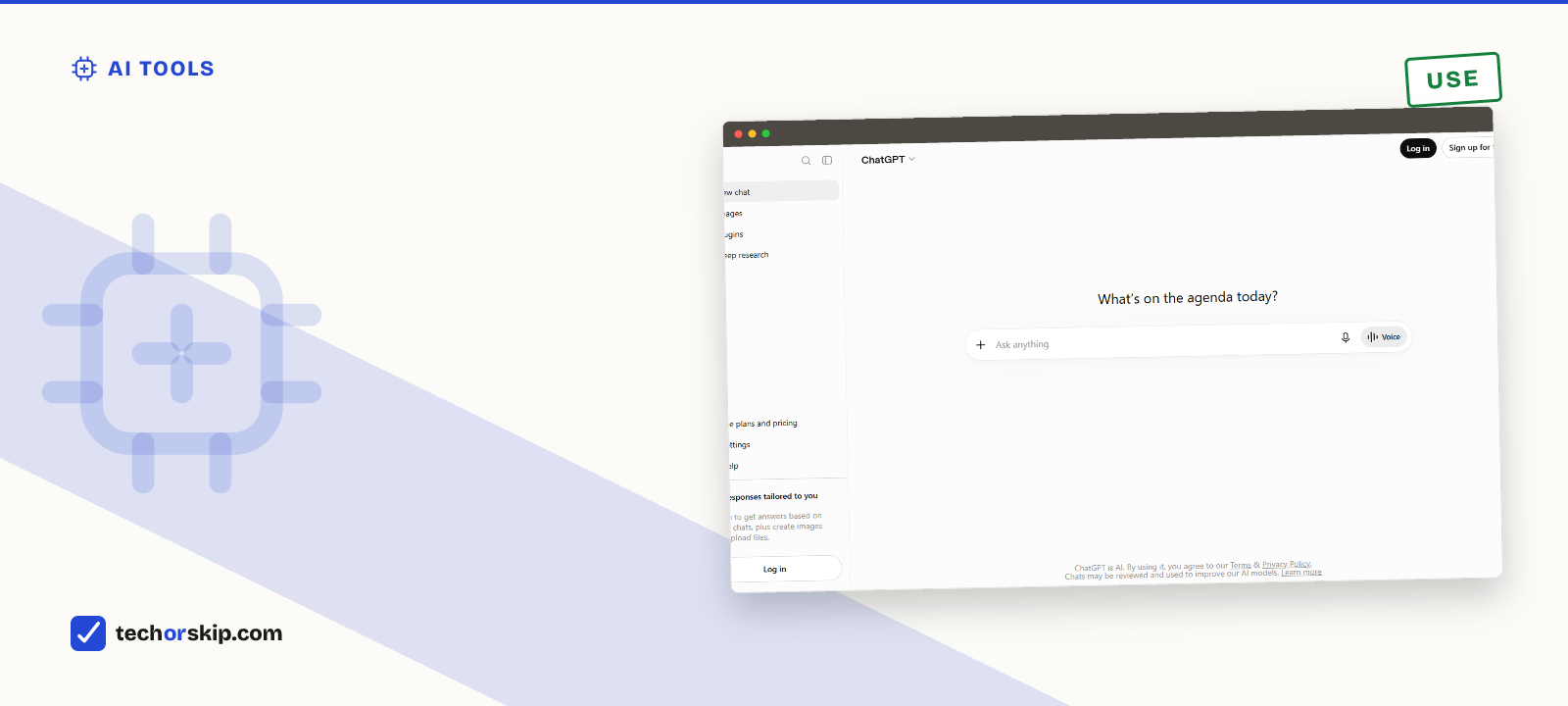
ChatGPT’s default chat screen, the one all three tools in this comparison are trying to beat.
What the benchmarks actually show
Public leaderboards are the closest thing to a neutral referee here, and their honest headline is that the top of the field is crowded. LMArena, which ranks models on head-to-head human preference votes, has repeatedly shown the leading ChatGPT, Claude, and Gemini models clustered inside each other’s confidence intervals. When three models overlap statistically, “first place” is a rounding artifact, not a finding.
Treat that as the real result. Four frontier models shipped in the six weeks before this was written, and each release reshuffles the order. If your decision hinges on a leaderboard position, you’ll be re-deciding every month for the rest of your life.
Benchmarks also measure narrow things. A model that wins on human preference votes for chat responses is not thereby better at summarizing a PDF without inventing a source. The task-specific numbers matter more than the overall rank, which is why our research and source-checking breakdown uses fabrication benchmarks instead of this one.
How the three are built differently
What you’re comparing isn’t three flavors of the same product.
ChatGPT has the broadest agent and app ecosystem. Plus subscribers get Codex, OpenAI’s coding agent, bundled rather than sold separately. If you want one app that also handles browser-style agent tasks, it’s built for that.
Claude leans hardest into long documents and coding. Anthropic’s pricing page lists Claude Code, Cowork, and Claude Design inside the $20 Pro tier rather than as add-ons, and the plan copy is aimed at professionals more than casual chat users.
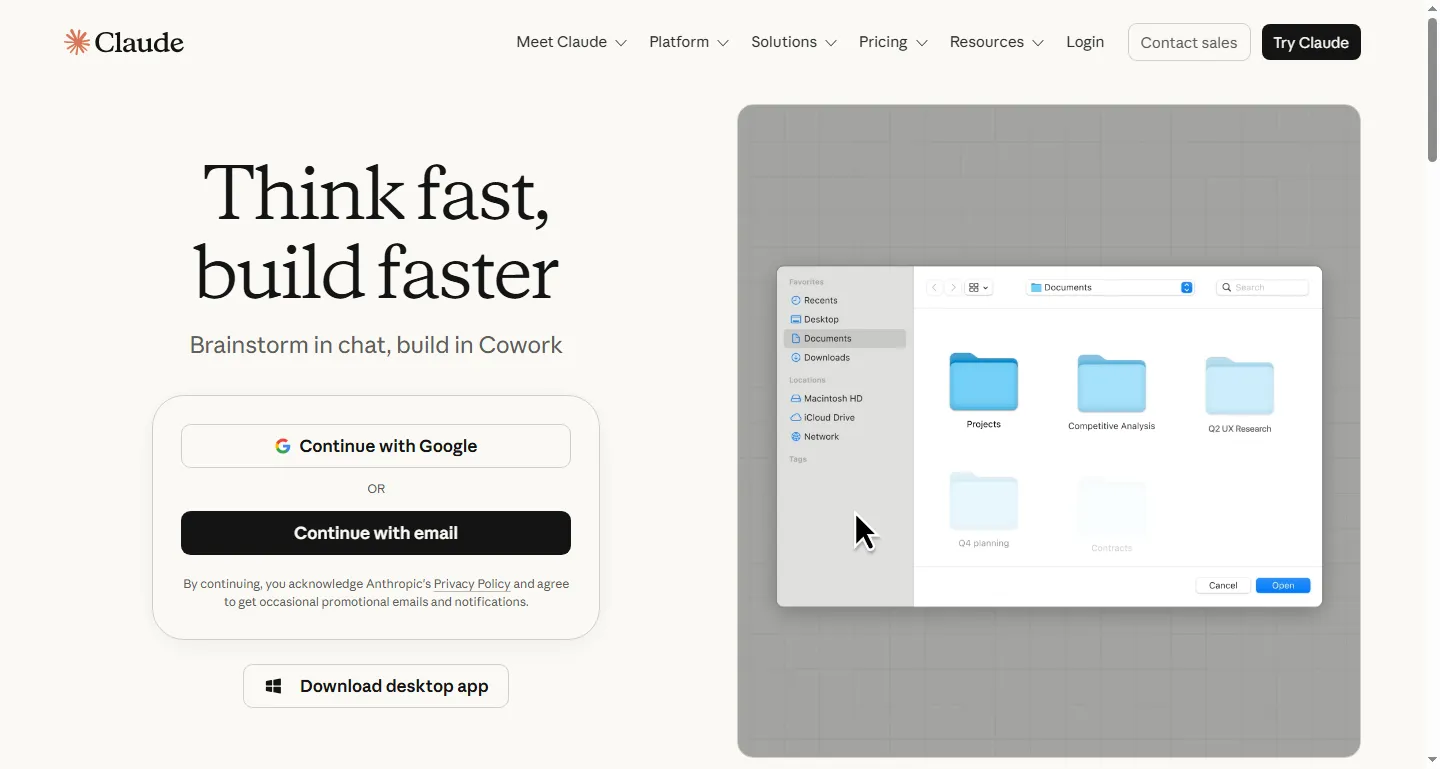
Claude’s homepage leans into “for professionals” messaging more than the other two.
Gemini is the only one tied directly into a productivity suite you might already pay for. Google’s AI plans page lists Gmail, Docs, Sheets, and Drive integration alongside storage bumps of 400 GB on AI Plus and 5 TB on AI Pro, and folds in YouTube Premium Lite at the Pro tier. If your work already happens in Google’s apps, that bundle is worth more than it looks on a feature list.
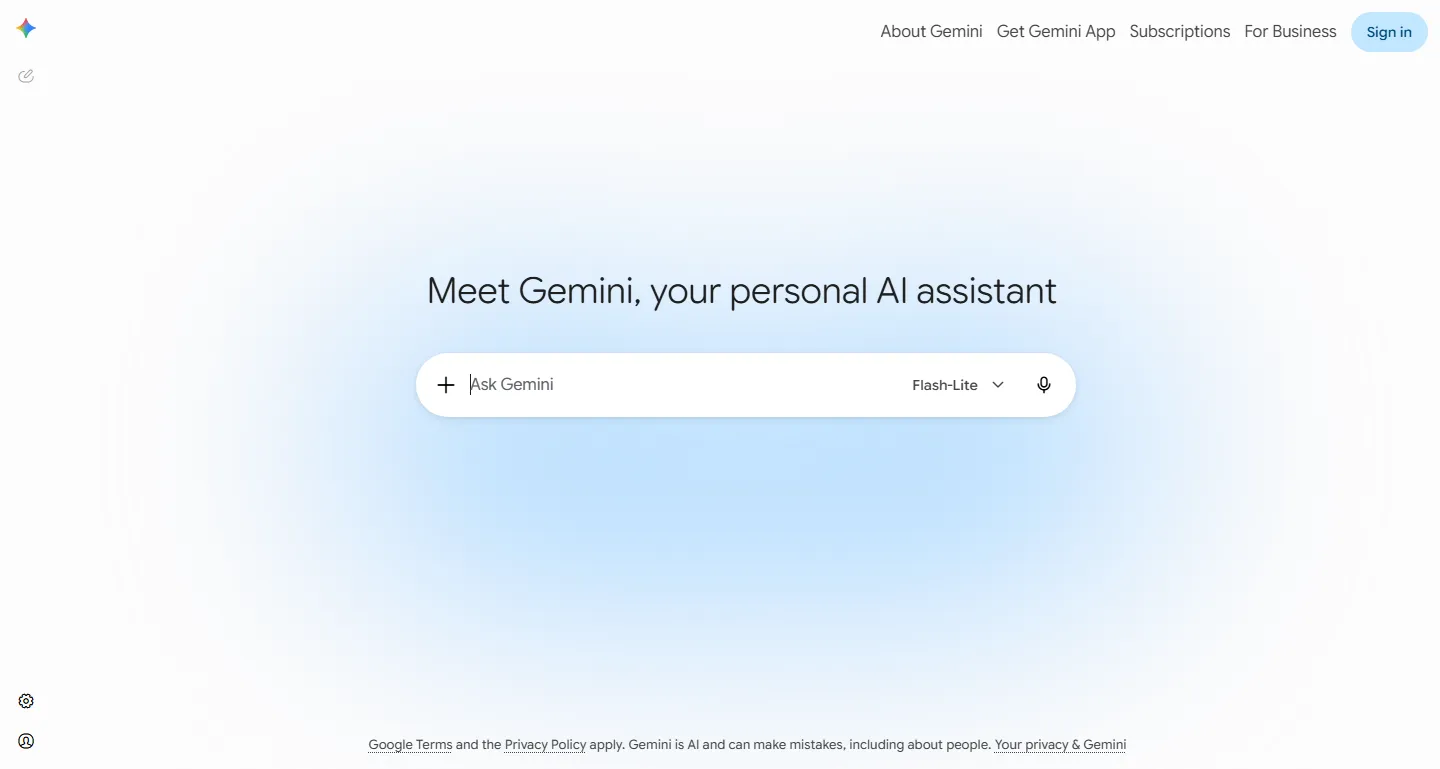
Gemini’s app, the one tool here that shows up inside Gmail and Docs too.
The free tiers are no longer equivalent
They used to be roughly interchangeable. They aren’t now, and the differences are the kind that change how the tool feels rather than what it can do.
Ads arrived on ChatGPT’s free tier. Axios reported in February 2026 that OpenAI began showing ads to US users on the Free and Go tiers, with Plus and above staying ad-free. That’s a real quality-of-life difference at $0 that no benchmark captures.
Google changed how its free limits work. At I/O 2026 the Gemini app moved off flat daily prompt counts to a sliding capacity model that weighs prompt length, uploaded files, and which tools you invoke. Practically, this means you can’t plan around “30 prompts a day” any more, because a long document analysis costs far more of your allowance than a one-line question.
Claude’s free tier stayed the most conventional of the three: a rolling window that resets, with the most capable model reserved for paid plans.
Which one to start with
| If your week is mostly | Start with | Why |
|---|---|---|
| Writing and general questions | Any of the three | All three free tiers handle this. Pick on tone preference, which is genuinely personal and not something a benchmark can settle for you. |
| Coding | Claude or ChatGPT | Both bundle a coding agent into the $20 tier. Gemini does not, on the consumer plan. |
| Work inside Gmail, Docs and Sheets | Gemini | It is the only one of the three that runs inside the suite itself rather than in a separate tab. |
| Long documents and careful editing | Claude | Anthropic prices and markets the product around long context and document work. |
| Research you will cite elsewhere | Verify whatever you use | All three can produce a citation that does not exist. No tier fixes this. |
| Occasional questions, a few a week | Nothing paid | Every free tier here covers light use. Paying changes almost nothing for you. |
If you’re deciding whether to pay for any of these at all, our breakdown of which AI subscription is actually worth paying for covers that question directly. And if ChatGPT is already your default, ChatGPT free vs Plus covers exactly when the free tier starts holding you back.
Worth it for
- All three have a free tier good enough to try before paying anything
- They are genuinely differentiated now: coding agent, suite integration, document work
- Switching costs are near zero, so a wrong pick is cheap to correct
Skip it if
- Model rankings change monthly, so today's leaderboard order is not a durable reason to pick one
- Free-tier limits are getting harder to predict as providers move to compute-based caps
- Ads now appear on ChatGPT's free and Go tiers in the US
Alternatives worth a look
- Microsoft Copilot. Worth checking if you already pay for Microsoft 365, since Microsoft folded its consumer AI features into Microsoft 365 Premium rather than selling them separately.
- Perplexity. Built specifically for search-and-cite answers, a narrower job than any of the three above attempt.
- Two subscriptions instead of one. If your work splits cleanly between coding and suite-based document work, paying for the strongest tool in each can beat one general plan. This is rarer than people think.
The verdict
USE. All three are worth using, and at least one of them free. What isn’t worth doing is paying for two general-purpose assistants that overlap by 90%.
Pick the one whose bundled extras match your week. Coding agent, or suite integration, or long-document work. Then stay on its free tier until you hit a limit that costs you something real, and only then pay. For the task-specific detail behind that advice, see our breakdowns on coding tools and research and source-checking.
Common questions
Is Claude better than ChatGPT for writing?
Neither wins outright. LMArena’s human-preference rankings show the leading ChatGPT, Claude, and Gemini models clustered inside each other’s confidence intervals, so a leaderboard gap of a point or two isn’t a real difference. What does differ is how each is built: Anthropic markets Claude around long documents and careful editing, while ChatGPT leans on its broader agent and app ecosystem. If your writing is long-form and document-heavy, Claude’s free tier is worth trying first.
Is Claude Pro worth it?
Claude Pro costs $20 a month, or $17 a month billed annually at $200 up front, and bundles Claude Code, Cowork, and unlimited projects rather than selling them separately. Whether it’s worth it comes down to whether you hit Claude’s free-tier limits doing long-document or coding work. Anthropic doesn’t publish an exact free cap, so the honest test is noticing real, repeated friction rather than guessing from a spec sheet.
Is ChatGPT Go worth it instead of Plus?
Go costs $8 a month and raises ChatGPT’s usage limits over the free tier, but it still shows ads and doesn’t get you the flagship model that Plus does. It’s a reasonable pick only if your one complaint about Free is running out of messages and you don’t care which model answers. Our ChatGPT free vs Plus breakdown covers that trade-off in more depth.