Smart rings are worth it if what you actually want is sleep and recovery data without wearing anything on your wrist. They’re a gimmick if you’re expecting notifications, GPS, or a screen, because none of the major rings do any of that. Not Oura, not Samsung’s Galaxy Ring, not RingConn, not Ultrahuman.
That’s a narrower job than a smartwatch does, and it’s exactly the point. A ring has no display to light up and no radio big enough for cellular, so the battery lasts days instead of hours. What’s left is a sensor that reads your body while you sleep and hands you a score in the morning.
Whether that’s worth $200 to $500, plus a possible monthly fee, depends entirely on whether you’ll look at that score. This article breaks down what each ring actually measures, what none of them can do, and where the subscription costs quietly change the math.
How we compared
The prices and specs below come from each brand’s own product and pricing pages, checked in July 2026. Testing claims are attributed to Wareable and TechRadar, both of which have worn these rings for extended reviews. We haven’t tested any of these ourselves.
Oura just complicated its own lineup: Ring 5 launched May 28, 2026, and started shipping June 4. The older Ring 4 hasn’t disappeared. It’s on clearance at up to 20% off, according to Kotaku’s coverage of the launch, which makes it the cheaper Oura option for now rather than the current one.
Four rings, one subscription split
| Ring | Price | Subscription | Battery | Best for |
|---|---|---|---|---|
| Oura Ring 5 | From $399 (Silver/Black), $499 premium finishes | $5.99/mo or $69.99/yr, mandatory for full data | About 1 week | Sleep and recovery detail, if you accept the fee |
| Oura Ring 4 | Discounted, up to 20% off during clearance | Same membership as Ring 5 | About 4-7 days | Oura tracking at a lower entry price |
| Samsung Galaxy Ring | $399.99 (frequently $299.99 on sale) | None | Up to 7 days | Samsung phone owners who refuse a monthly fee |
| RingConn Gen 2 | $299 | None | 10 to 12 days | Longest battery life with no ongoing cost |
| Ultrahuman Ring Air | $349 | None for core data; PowerPlugs add-ons free year one | 4 to 6 days | Activity and recovery metrics beyond the basics |
What a ring actually tracks well
Every ring here reads the same core signals: heart rate, heart rate variability, skin temperature, blood oxygen, and sleep stages. Wareable’s testing has found the accuracy for sleep and recovery holds up well across price tiers, since a ring worn snugly against a finger’s arteries gets a cleaner pulse signal than a wrist sensor does.
The Galaxy Ring’s overnight reports were reliable enough that TechRadar’s reviewer said it “feels like having the sleep features of a Galaxy Watch without wearing one to bed.” That’s the pitch for the whole category in one sentence.
Ultrahuman leans further into recovery science with an Adenosine Clearance Window, a caffeine-timing guide built from your own sleep data, plus modular PowerPlugs for things like AFib detection and jet lag advice.
Where rings get shaky is intense movement. None have GPS, so distance and pace during a run are estimated from your phone or not tracked at all. Treat the fitness numbers as a rough add-on, not the main event.
What none of them can do
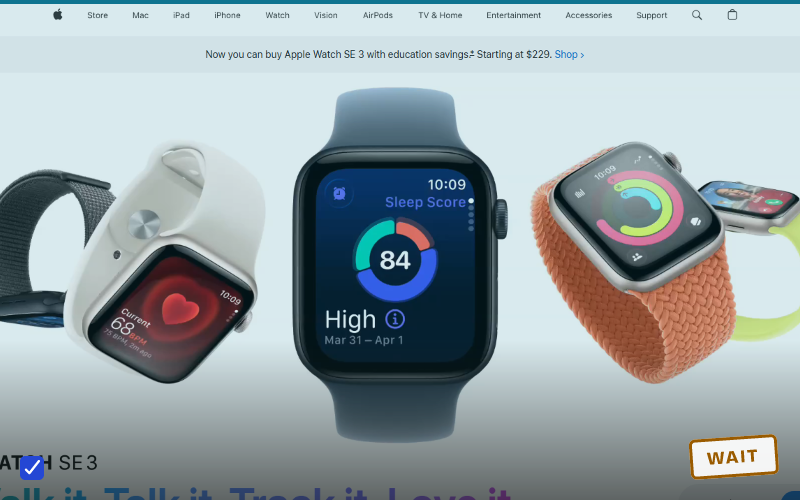
No ring has a screen. No ring buzzes with a text message you can read at a glance. No ring taps to pay for coffee. If any of that matters to you daily, you’re shopping for a smartwatch or a fitness band, not a ring.
That trade isn’t a flaw so much as the entire design decision. Drop the screen and the radio, and you get a device you forget you’re wearing, with a battery that lasts a week instead of a day. You just can’t glance at it for anything.
The subscription question
This is where the category splits cleanly in two. Oura’s own product page states membership costs $5.99 a month or $69.99 a year, with the first month free, and it’s required for sleep stages, Readiness Score, HRV trends, Cycle Insights, and illness detection. Basic step and heart rate data still shows without it, but that’s most of what makes Oura worth buying.
Samsung, RingConn, and Ultrahuman all built their pitch around skipping that fee entirely. The Galaxy Ring’s full feature set works with no ongoing cost, and it’s the reason TechRadar frames it as the pick for existing Samsung owners specifically to dodge a subscription.
Ultrahuman’s case needs one caveat. Its core sleep and recovery data has no subscription, ever, but PowerPlugs (the AFib detection, lactate, and cycle-tracking add-ons) are free for the first 12 months and haven’t had post-year-one pricing announced yet, per Tech Times’ coverage of the Ring Pro launch. “No subscription” is accurate for the ring itself. It’s not yet guaranteed for every feature inside the app.
Verdict on accuracy versus hype
None of this is snake oil. The underlying sensors are the same technology wristbands use, just placed somewhere with better blood flow. The gimmick risk isn’t the hardware. It’s paying $500 plus a recurring fee for insights you’ll check once and then ignore.
Worth it for
- Battery lasts days instead of hours, so you never think about charging
- Sleep and recovery accuracy holds up well across price tiers, per Wareable's testing
- Three of the four major rings now skip subscriptions entirely
- Genuinely invisible to wear, unlike a watch on your wrist
Skip it if
- No screen means no glanceable notifications, ever
- No GPS, so workout tracking is rougher than a smartwatch's
- Oura's membership is mandatory for the features that make it worth buying
- Sizing kits and returns add friction most wristwear doesn't have
Alternatives
- A fitness band costs less than most rings and adds a small screen for at-a-glance stats. Our smartwatch vs fitness band comparison covers where that tradeoff lands.
- A full smartwatch gets you notifications, payments, and GPS, at the cost of daily charging and a much higher price.
- Skip a wearable entirely if you don’t already check your phone’s health app. A ring only pays off if you’ll actually read the data it collects.
Verdict
WAIT before buying a smart ring until you know you’ll open the app most mornings. If overnight sleep and recovery data genuinely changes how you train or rest, a subscription-free option like the Galaxy Ring, RingConn Gen 2, or Ultrahuman Ring Air gets you there without a recurring bill. Oura still leads on polish and depth, but only if you’re fine paying for it every month. Everyone chasing notifications or GPS should look at a band or watch instead.
Common questions
Is a fitness band enough, or do I need a smartwatch?
For most people, yes, a band is enough, and the same logic applies to rings. Bands and rings both track steps, sleep, and heart rate about as well as pricier devices for the fundamentals. A smartwatch only earns its cost if you’ll use the apps, payments, or calls it adds. If you’re comparing a ring against a band specifically, the ring wins on invisibility and battery life; the band wins on having a screen at all.
Is an Apple Watch worth it if I don’t work out?
Possibly, but not for fitness reasons. The Apple Watch works as a limited phone replacement, Apple Pay, notifications, fall detection, cellular as an option, regardless of whether you exercise. A smart ring can’t do any of that. If those non-fitness features don’t appeal to you either, a ring or a plain fitness band covers the actual tracking for a lot less money and no daily charging.